

The distance between Apongbon Bridge and the National Orthopaedic Hospital Igbobi, Lagos is roughly 12 kilometres. The journey is typically completed in under an hour on a good day in Lagos traffic.
For Angel, it took nearly two years.
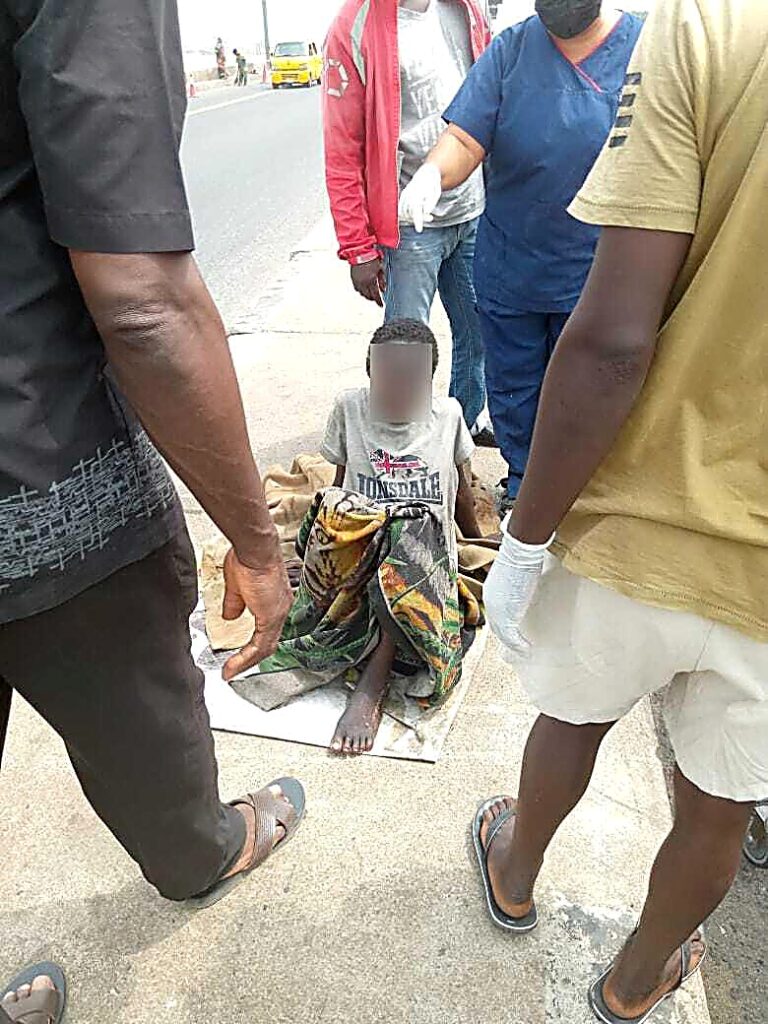
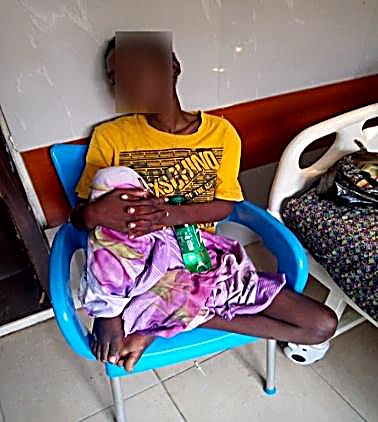
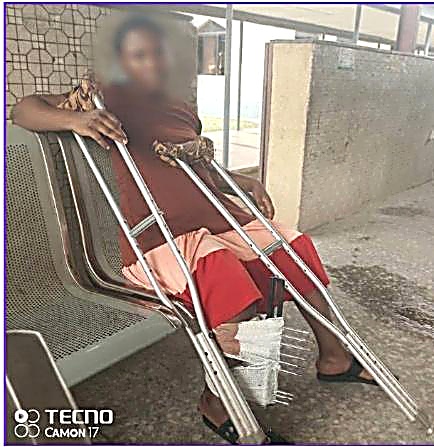
In the last quarter of 2024, she was found alone and unsheltered on one of Lagos’ busiest bridges, surviving on passing charity and exposed to the many dangers that accompany life on the streets for a vulnerable young woman. Angel had become almost invisible to the city, as is often the case with the homeless, displaced and disabled that occupy the nooks and crannies of Lagos. One thing, however, made ignoring her difficult. She had a severely damaged leg with exposed bones; an injury sustained after a hit-and-run accident.
Angel’s situation was not entirely unusual within Lagos. Across the city, disabled or mentally unstable persons occupy public spaces for extended periods, surviving largely through sporadic acts of charity rather than structured emergency or public welfare response.
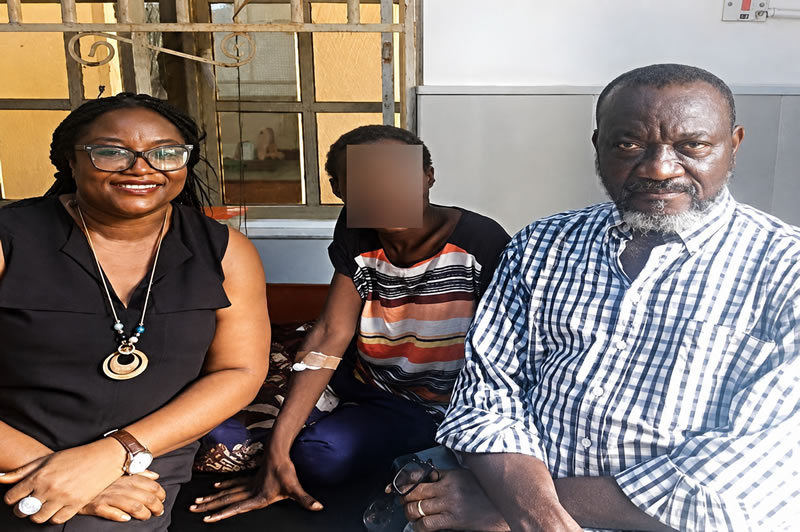
Given the severity of her injuries, Angel’s case came to the attention of the Centre for Health, Ethics and Law Development (CHELD) through its Executive Director, who initiated intervention. By the time they stepped in, she had reportedly spent an extended period immobilised on the bridge, with this severe and quickly deteriorating injury. Her case raises salient questions on emergency care delivery in Nigeria. Although Nigeria’s emergency care framework imposes obligations on healthcare providers to treat urgent medical cases,[2] there remains far less clarity around the earlier stage of intervention: who identifies, retrieves, transports and assumes responsibility for persons in distress before they ever arrive at a hospital?
CHELD’s Practical Support
Encountering Administrative Barriers
For CHELD, the first challenge was Angel’s evacuation. Her condition made transport medically risky. Additionally, the environment itself presented a threat to the team. Due to the informal control of the area by local hoodlums or agbero boys, any attempt to remove her required shrewdness and caution. Initial efforts to secure police assistance for safe evacuation were delayed and inconclusive. A subsequent request to the Lagos State Ministry of Social Welfare and Youth Development eventually resulted in verbal approval, but with a critical limitation: the state declined to assume financial responsibility for Angel’s treatment. In effect, permission was granted, but support was withdrawn. In this situation lies the disconnect between constitutional expectations of welfare provision and the practical limits of state-funded emergency response.
Navigating a Fragmented Healthcare System
Attempts to transfer Angel into care revealed further constraints. At the Federal Medical Centre, Ebute-Metta, the team tried to secure an ambulance for her removal, but they encountered resistance. The staff informed CHELD that the hospital was not in the habit of “picking mad people off the streets”. The ambulance service, they were also told, was reserved for cases officially identified by the hospital. They would have to transport her themselves.
By this stage, CHELD had become familiar with a recurring pattern: institutional permission but denied access to the means required to act.
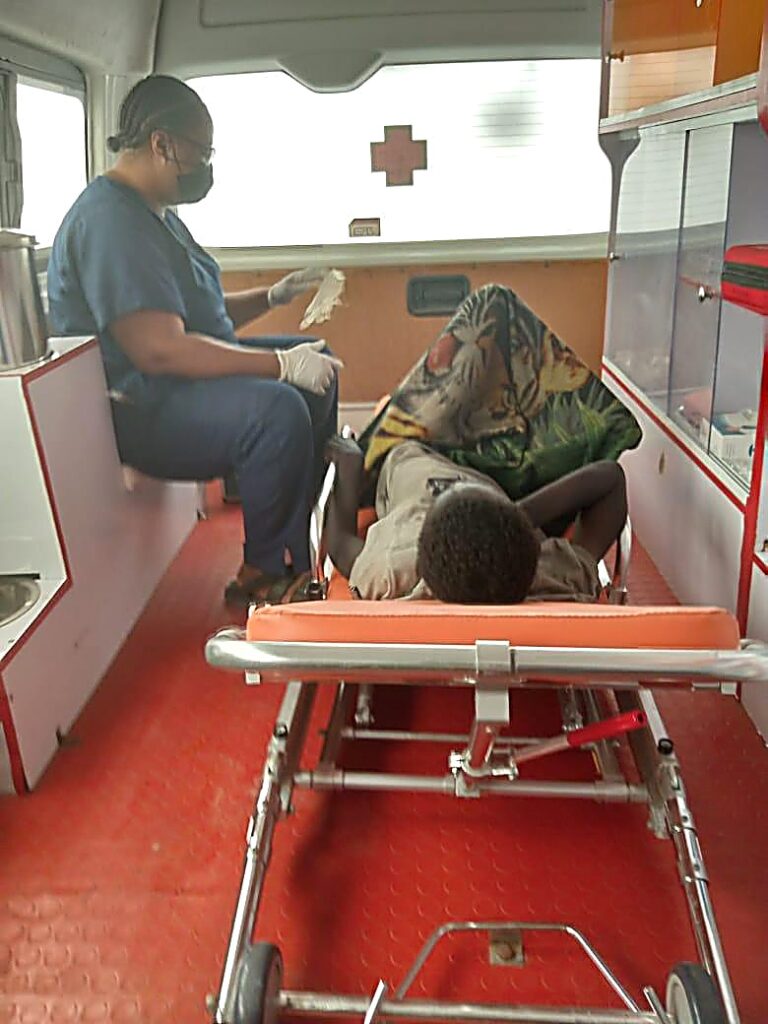
At a private facility, St. Edwards Hospital, Ajah, an ambulance was finally secured, but only after significant out-of-pocket costs and delay. Within a short time, CHELD, accompanied by a deployed nurse, transported her to the hospital.
Dignity in Healthcare Delivery
Upon arrival at St. Edwards, Angel was denied entry into the building. The hospital staff, overwhelmed by her condition and the effects of her prolonged street exposure, directed that she be cleaned outside the building before admission. Surprisingly, no member of the clinical staff undertook the task. A cleaning staff was paid, hygiene supplies were purchased, and Angel was cleaned outside. Only after this was she permitted into the hospital for treatment.
Such moments reveal the weaknesses in healthcare facilities. The right to dignity occupies a central place within regulatory frameworks. This right and its corresponding duty are contained in the Code of Ethics for Medical and Dental Practitioners,[3] the Constitution,[4] [5] and the Universal Declaration of Human Rights.[6] Yet, in practice, health facilities are often reluctant to admit individuals perceived to be mentally unstable, severely unclean, or socially abandoned; persons whose conditions fall outside the boundaries of what these facilities are comfortable accommodating. The reality begs the question: how can the dignity of the vulnerable be preserved in healthcare delivery?
Capacity Constraints: A Corollary of Workforce Migration in Nigerian Specialist Care
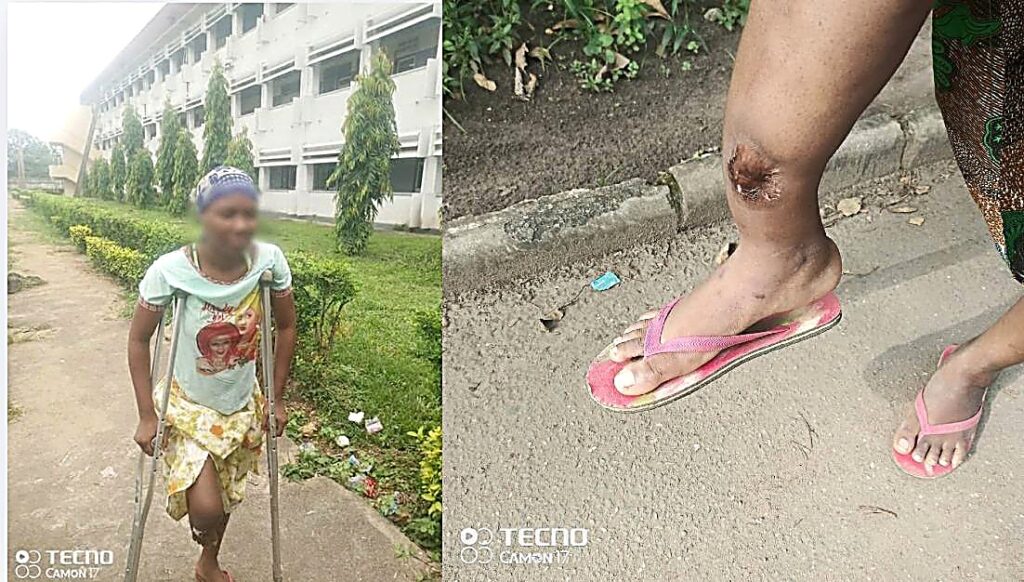
Angel’s first physical assessment revealed that she required orthopaedic surgery beyond St. Edwards’ capacity. The treatment would require either a transfer to the National Orthopaedic Hospital, Igbobi, or a private arrangement with an orthopaedic specialist to be brought in for treatment. The consultation came at an unanticipated additional cost.
Nigeria’s orthopaedic care infrastructure remains concentrated in a few federal centres, including Igbobi (Lagos), Kano, Enugu, and most recently Jos,[7] all of which currently operate under significant capacity constraints and workforce shortages. Recent national reporting indicates that in 2024 alone, 4,193 doctors and dentists left Nigeria, while a total of over 43,000 doctors, nurses, pharmacists, and laboratory scientists migrated within the 2023–2024 period.[8] Angel’s treatment had to be navigated in the face of continuing shortages of medical specialists across multiple disciplines and increased medical workforce migration.[9]
She was eventually transferred to the National Orthopaedic Hospital, Igbobi, where she began treatment as an outpatient.
Medical and transportation costs consumed well over a million naira, an amount exceeding what vulnerable and indigent persons could afford.
Nigeria’s Disjointed Health System: A Case for Mental Health Integration
After a prolonged wait, Angel was eventually scheduled for surgery at Igbobi. Preparations were underway when, a day before the procedure, the doctors observed signs of significant psychological distress that raised concerns about her fitness for surgery and threatened to derail her operation and recovery. While research has linked psychiatric disorders, physical trauma and poor orthopaedic outcomes,[10] Nigeria’s health system continues to treat mental and physical health through separate and poorly coordinated pathways, forcing patients like Angel to navigate fragmented care.
Igbobi, rather than bring in a specialist, told the team to take Angel to the Federal Neuro-Psychiatric Hospital, Yaba, where a new cycle of tests and treatments began, consuming another six months. By the time she was cleared, she had lost her place on the surgical list and had to start the process afresh. At this point, nearly a year had passed since she had first entered the orthopaedic care system.
Waiting for Surgery: Angel’s Two-Year Delay
In April 2026, the team received an unexpected call. The question on the line was simple: could she be brought in for an earlier slot? Within hours, she was readmitted to Igbobi and, on the 27th of April, two years after CHELD had found her, Angel was wheeled into the theatre. By evening, the surgery was completed.
Her story raises fundamental questions about immediacy in emergency response: why did an urgent case such as this not translate into urgent treatment? Why was progress slow and impeded by repeated referrals and transfers across institutions? What began as an urgent medical need stretched into a two-year journey that revealed the hairline fractures in the system.
Including the Vulnerable in ‘Universal’ Health Coverage
The idea of Universal Health Coverage[11] rests on the availability of treatment and the ability of health systems to deliver continuous care without financial or infrastructural hurdles. Nigeria’s legal framework for healthcare, including the National Health Insurance Authority (NHIA) Act 2022, reflects an official commitment to Universal Health Coverage and to reducing financial barriers to access. In principle, it expands coverage and regulates health financing to provide support for vulnerable groups through mechanisms such as the Vulnerable Group Fund,[12] and aligns with constitutional commitments to social welfare.[13] Yet, in practice, emergency care for abandoned, disabled, homeless or displaced persons exists outside this framework of protection. In many cases, intervention is left to goodwill or private initiative rather than a structured state response. Beyond this, mental healthcare remains peripheral within the health system, structurally separated from physical care and far from the ideal of integrated health coverage.
Angel, after a series of routine tests, was discharged on the 8th of May. Her recovery is ongoing.
Policy and Reform Lessons
Angel’s journey shows us that healthcare is often assembled in fragments outside public systems and carried forward by private individuals. The NHIA Act, the NHA, the Code of Ethics for Medical and Dental Practitioners, the Lagos State Health Sector Reform Law, alongside constitutional guarantees on dignity and welfare, reflect an established intention to promote Universal Health Coverage. Angel’s experience, mirrored by innumerable cases across the country, shows us that the mere existence of this framework does not guarantee comprehensiveness and continuity of care.
- A starting point is the development of a formalised emergency response pathway for vulnerable persons in public spaces, which establishes clear operational responsibility for identifying, retrieving, and transporting individuals found in distress.
- Secondly, there is a need for policies mandating the integration of mental health services into general and specialist hospitals. Hospitals managing severe physical trauma should be equipped with psychiatry services for early assessment and stabilisation.
- Emergency care financing and insurance for indigent patients must be implemented within existing legal frameworks, including the NHIA and the Vulnerable Group Fund.
- Investment in specialist infrastructure and workforce training is needed. Concentration of services within a few federal centres creates obstacles that extend waiting periods even after clinical approval for treatment.
- A fast-track pathway that prioritises emergency cases would prove valuable in overcoming unnecessarily delay in healthcare delivery.
Jointly implemented, these reforms would transform the Nigerian health system into one capable of delivering continuous, coordinated, and comprehensive Universal Health Coverage.
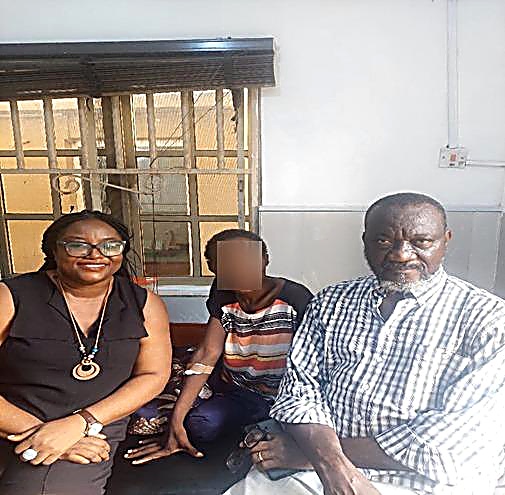
CHELD is deeply grateful to its partners, donors, and supporters whose generosity continues to make interventions like Angel’s story possible. We welcome individuals and organisations who would like to support or collaborate with us to reach out and join us in this work.
[1] Names and identifying details have been changed to protect the privacy of the individual involved.
[2] National Health Act 2014, s. 20
[3] Rules of Professional Conduct for Medical and Dental Practitioners, r. 9
[4] Constitution of the Federal Republic of Nigeria, as amended s. 34
[5] Ibid, s. 17(2)(b)
[6] Universal Declaration of Human Rights, art. 1
[7] Omolola Fadile, ‘National Orthopaedic Hospital Jos Begins Full Operations’, (Voice of Nigeria, October 10 2025) https://von.gov.ng/national-orthopaedic-hospital-jos-begins-full-operations/ accessed May 10 2026
[8] Lara Adejoro, ‘4,193 Doctors, Dentists Left Nigeria in 2024 – Report’ (Punch Newspaper, Lagos 15 November, 2025) https://punchng.com/4193-doctors-dentists-left-nigeria-in-2024-report/?utm_source=chatgpt.com#google_vignette accessed 21 May 2026
[9] Amina Umar et al, ‘Crisis of Brain Drain in Nigeria’s Health Sector: Challenges, Opportunities, and the Path Forward’ International Journal of Maternal and Child Health and AIDS 2025 14 e011 doi:10.25259/IJMA_11_2025
[10] J.I. Yoo et al. ‘Orthopedic Patients with Mental Disorder: Literature Review on Preoperative and Postoperative Precautions’ Clinics in Orthopedic Surgery (2022) 14(2), 155–161 https://doi.org/10.4055/cios21156
[11] Universal Health Coverage means that all people have access to the full range of quality health services they need, when and where they need them, without financial hardship. (World Health Organization) https://www.who.int/health-topics/universal-health-coverage#tab=tab_1 accessed May 12 2026
[12] National Health Insurance Authority Act, ss. 25 and 26
[13] Constitution of the Federal Republic of Nigeria, as amended, Section 17(3)(g)